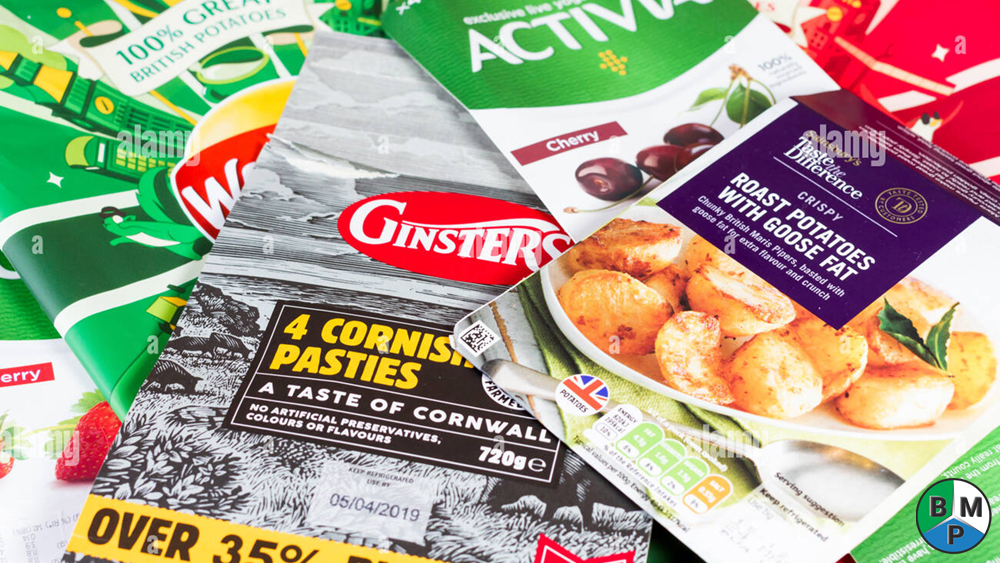


What is the purpose of food packaging testing? Which regulations and testing criteria for food packaging inspection have been established by the State and the Ministry of Health, and which standards must manufacturers follow? Let’s explore these requirements in the article below.

High-quality food packaging
Why Is Food Packaging Testing Necessary?
As you may already know, food packaging refers to materials that regularly come into contact with food. Its primary purpose is to preserve and contain food products, ensuring they reach consumers safely throughout a specified storage period.
Food packaging is manufactured using various components and chemical substances to create different types of packaging materials.
According to research, there are two main reasons why food packaging testing should be conducted before products reach consumers:
Since food frequently comes into direct contact with its packaging, chemical reactions may occur during storage and use, potentially generating harmful substances that pose risks to consumers.
The State, Government, and Ministry of Health aim to prevent food poisoning and protect consumer health. Therefore, they have established common requirements, standards, and regulations requiring food packaging testing to evaluate product quality and safety for consumers.
Learn more about chemical risks in packaging: PFAS in Food Packaging: Regulations, New Limits, and What Businesses Need to Know
Therefore, businesses and food packaging manufacturers must conduct packaging inspections in accordance with the regulations established by the State and Government before exporting or distributing their products to the market.
So, what are the regulatory standards for food packaging testing? Let’s take a closer look at the following sections.
National Technical Regulations for Food Packaging Inspection
Under current Vietnamese legislation, the food packaging testing standards and requirements are specified according to the following four categories of food packaging materials:
The National Technical Regulation on Hygiene and Safety for Synthetic Plastic Packaging and Utensils in Direct Contact with Food is specified in QCVN 12-1:2011/BYT.
The National Technical Regulation on Hygiene and Safety for Rubber Packaging and Utensils in Direct Contact with Food is specified in QCVN 12-2:2011/BYT.
The National Technical Regulation on Hygiene and Safety for Metal Packaging and Utensils in Direct Contact with Food is specified in QCVN 12-3:2011/BYT.
The National Technical Regulation on Hygiene and Safety for Glass and Ceramic Packaging and Utensils in Direct Contact with Food is specified in QCVN 12-4:2015/BYT.
Food Packaging Testing Criteria
Food packaging quality testing
Food Packaging Inspection Criteria
Food packaging comes in many different forms and is manufactured using various raw materials. Consequently, the testing criteria for food packaging also vary depending on the material used.
The following table presents the testing criteria and corresponding test methods to support the food packaging inspection process:
| I. QCVN 12-1:2011/BYT – SYNTHETIC PLASTIC PACKAGING AND UTENSILS | |||
| A. MATERIAL TESTING (Synthetic plastic packaging and utensils) | |||
| 1 | Plastic identification | IR | – |
| 2 | Lead (Pb) | QCVN 12-1:2011/BYT (GF-AAS) | 0.05 µg/g |
| 3 | Cadmium (Cd) | QCVN 12-1:2011/BYT (GF-AAS) | 0.02 µg/g |
| 4 | Barium (Ba) | QCVN 12-1:2011/BYT (ICP-MS) | 0.05 µg/g |
| 5 | Vinyl chloride | QCVN 12-1:2011/BYT (GC/MS) | 0.1 µg/g |
| 6 | Total volatile substances (styrene, toluene, ethylbenzene, n-propylbenzene) | QCVN 12-1:2011/BYT (GC/FID) | 0.1 mg/g |
| 7 | Styrene and ethylbenzene | QCVN 12-1:2011/BYT (GC/FID) | 0.1 mg/g |
| 8 | Barium (Ba) | QCVN 12-1:2011/BYT (ICP-MS) | 0.05 µg/g |
| 9 | Bisphenol A (BPA) | QCVN 12-1:2011/BYT (GC/MS) | 50 μg/g |
| 10 | Heavy metals | QCVN 12-1:2011/BYT (Colorimetric method) | 0.5 µg/ml |
| 11 | Dry residue | QCVN 12-1:2011/BYT (Gravimetric method) | 1 µg/ml |
| 12 | Potassium permanganate (KMnO₄) consumption | QCVN 12-1:2011/BYT (Titration method) | 1 µg/ml |
| 13 | Phenol | QCVN 12-1:2011/BYT (GC/MS) | 1 µg/ml |
| 14 | Formaldehyde | QCVN 12-1:2011/BYT (Colorimetric method) | – |
| 15 | Antimony (Sb) | QCVN 12-1:2011/BYT (GF-AAS) | 0.02 µg/ml |
| 16 | Germanium (Ge) | QCVN 12-1:2011/BYT (ICP-MS) | 0.02 µg/ml |
| 17 | Total lactic acid | QCVN 12-1:2011/BYT (IC) | 5 µg/ml |
| II. QCVN 12-2:2011/BYT – RUBBER PACKAGING AND UTENSILS | |||
| A. MATERIAL TESTING | |||
| 18 | Lead (Pb) | QCVN 12-2:2011/BYT (GF-AAS) | 0.05 µg/g |
| 19 | Cadmium (Cd) | QCVN 12-2:2011/BYT (GF-AAS) | 0.02 µg/g |
| B. MIGRATION TESTING | |||
| 20 | Lead (Pb) | QCVN 12-2:2011/BYT (GF-AAS) | 0.02 µg/ml |
| 21 | Cadmium (Cd) | QCVN 12-2:2011/BYT (GF-AAS) | 0.02 µg/ml |
| 22 | Zinc (Zn) | QCVN 12-2:2011/BYT (Flame-AAS) | 0.1 µg/ml |
| 23 | Heavy metals | QCVN 12-2:2011/BYT (Colorimetric method) | 0.5 µg/ml |
| 24 | Dry residue | QCVN 12-2:2011/BYT (Gravimetric method) | 1 µg/ml |
| 25 | Phenol | QCVN 12-2:2011/BYT (GC/MS) | 1 µg/ml |
| 26 | Formaldehyde | QCVN 12-2:2011/BYT (Colorimetric method) | – |
| III. QCVN 12-3:2011/BYT – METAL PACKAGING AND UTENSILS | |||
| A. MIGRATION TESTING | |||
| 27 | Lead (Pb) | QCVN 12-3:2011/BYT (GF-AAS) | 0.02 µg/ml |
| 28 | Cadmium (Cd) | QCVN 12-3:2011/BYT (GF-AAS) | 0.02 µg/ml |
| 29 | Arsenic (As) | QCVN 12-3:2011/BYT (GF-AAS) | 0.02 µg/ml |
| 30 | Formaldehyde | QCVN 12-3:2011/BYT (Colorimetric method) | – |
| 31 | Dry residue | QCVN 12-3:2011/BYT (Gravimetric method) | 1 µg/ml |
| 32 | Phenol | QCVN 12-3:2011/BYT (GC/MS) | 1 µg/ml |
| 33 | Vinyl chloride | QCVN 12-3:2011/BYT (GC/MS) | 0.1 µg/g |
Another important food packaging safety factor to consider: Food Packaging Printing Inks: TCVN 13928:2023 and Essential Safety Requirements
These are the key reasons why food packaging testing is necessary, along with the testing criteria that packaging manufacturers should understand and follow. Compliance with the common requirements established by the State and Government is essential to help prevent potential health risks and protect consumers.
BMP Group – A Manufacturer Committed to Strict Quality Control Standards
BMP Group is one of the companies committed to quality control through rigorous inspection and testing criteria.
To achieve this, we have invested in advanced production lines imported from Germany, featuring equipment such as electronic multi-color gravure printing machines, coating machines, solvent-based and solvent-free dry laminating machines, inspection machines, pouch-making machines, slitting machines, and 3-layer and 5-layer blown film extrusion machines.
In addition, to meet packaging demand nationwide, BMP Group has established two manufacturing facilities: one at Tan Phu Trung Industrial Park, Cu Chi District, and another at VSIP II Industrial Park, Binh Duong Province.

BMP Group's packaging manufacturing facility, with a production capacity of up to 2,100 tons per month.
International certifications achieved by BMP Group through 16 years of continuous effort:
2011: ISO 9001:2008 certification.
2014: HACCP and GMP certifications for food safety.
2017: ISO 9001:2015 certification.
2020: BRC Issue 6 certification.
Explore our quality management standards: International Certifications in the Printing and Packaging Industry: ISO, BRCGS, FSC, ISCC PLUS, and Other Key Standards
To ensure that finished packaging products meet quality requirements and protect consumer health, strict food packaging testing procedures and food-contact packaging standards must be followed.
If you are interested in partnering with BMP Group, please contact us via our hotline at (028) 66 756 588 for further assistance.