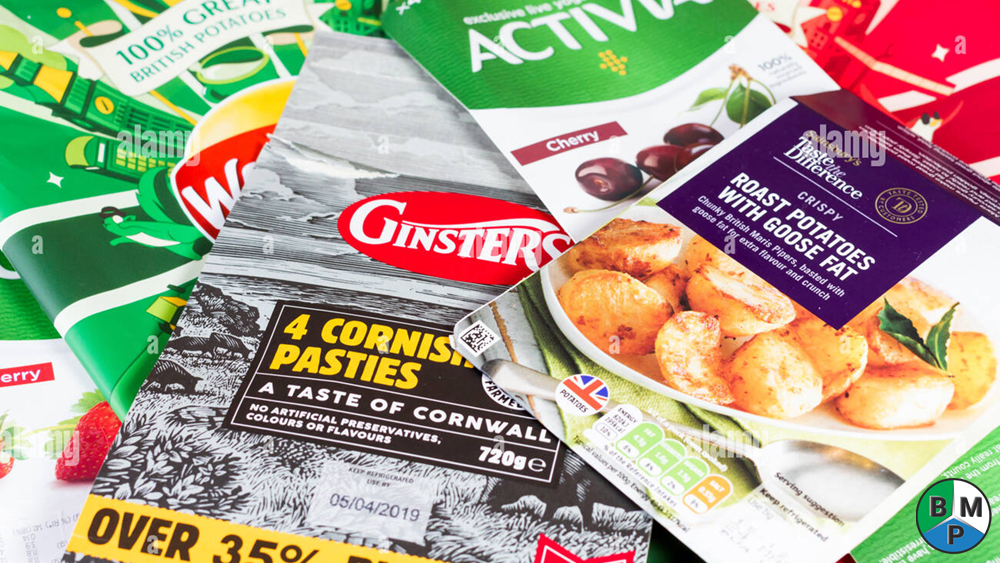


Flexible packaging is now widely used in the food, beverage, coffee, pharmaceutical, cosmetics, agricultural, and many other consumer goods industries.
Depending on product preservation requirements and packaging line conditions, businesses can use single-layer film or combine multiple material layers to create flexible laminated packaging.
Each material has its own advantages. Some provide excellent printability, others offer strength or heat-sealing performance, while certain materials are used to improve barriers against oxygen, moisture, or light.
Therefore, understanding the structure and properties of each film type is an important step in selecting suitable packaging for a product.
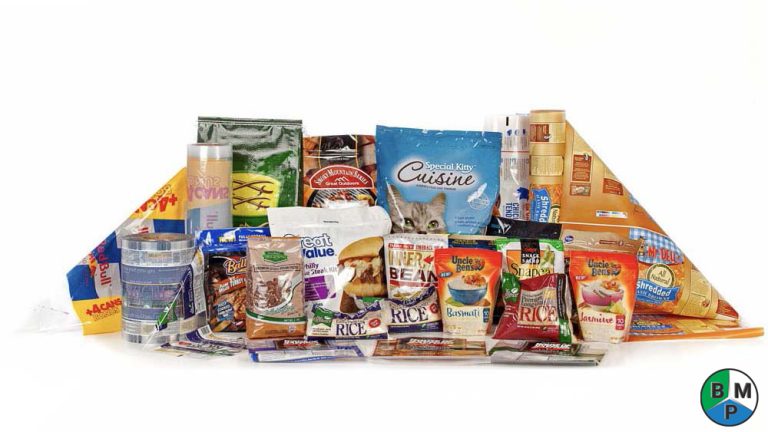
What Is Single-Layer Packaging?
In common packaging industry terminology, single-layer film generally refers to a single layer of film used directly without being laminated to another film.
Some materials that can be used as single-layer films include:
PE.
LDPE.
LLDPE.
HDPE.
PP.
CPP.
BOPP in certain applications.
Examples include:
PE bags.
HDPE bags.
PP bags.
Certain types of wrapping film and simple packaging films.
Read more: An Overview of Films Used in Packaging
What Are the Advantages of Single-Layer Film?
Depending on the polymer used, single-layer film can offer several benefits, including:
Simple structure.
Low weight.
Relatively easy cost optimization.
Good heat-sealing performance, particularly with PE or CPP.
Potentially high transparency.
Suitability for products that do not require complex barrier properties.
However, a single material layer may struggle to meet all requirements simultaneously, such as:
Stiffness.
Printability.
Oxygen barrier.
Moisture barrier.
Puncture resistance.
Heat resistance.
Heat-sealing performance.
This is one of the main reasons multilayer laminated films have been developed.
Is Single-Layer Film the Same as Mono-Material Packaging?
Not exactly. This is an important distinction.
Single-Layer Film
This refers to a film consisting of one material layer.
Example:
PE
Mono-Material Packaging
Mono-material packaging can consist of multiple layers, but most or all of its structure belongs to the same polymer family.
Example:
MDO-PE / PE
This can still be a multilayer structure, but it is designed around the PE material stream.
Therefore:
Single-layer refers to the number of layers, while mono-material refers to the material composition.
These two terms should not be used interchangeably.
What Is Flexible Laminated Packaging?
Flexible laminated packaging is a structure created by combining two or more layers of materials.
These layers may include:
PET.
BOPP.
PE.
CPP.
PA.
MPET.
MCPP.
Aluminum foil.
Coatings.
Adhesives.
The objective is to combine the advantages of different materials to create a structure that meets the product's packaging requirements.
For example:
PET / AL / PE
In this structure:
PET supports mechanical strength and printability.
AL provides a very high barrier.
PE serves as the heat-sealing layer.
Another structure:
PET / MPET / PE
This can provide a metallic appearance and improved barrier performance, although it generally does not achieve the same barrier level as solid aluminum foil.
Why Are Multiple Material Layers Laminated Together?
No single polymer is optimal for every packaging requirement.
For example:
PET
Can provide:
Mechanical strength.
Dimensional stability.
Printability.
Relatively good heat resistance.
However, PET is generally not the primary sealing layer in many flexible packaging structures.
PE
Offers:
Good heat-sealing performance.
Relatively good moisture barrier.
Flexibility.
However, its oxygen barrier is generally more limited than that of certain barrier materials.
PA – Nylon
Used when additional performance is required in terms of:
Toughness.
Puncture resistance.
Mechanical strength.
It is therefore commonly found in vacuum packaging and packaging for products with sharp edges.
Aluminum Foil – AL
Can provide a very high barrier against:
Light.
Oxygen.
Moisture.
This performance depends on the foil layer remaining intact.
MPET and MCPP
These are films metallized with an extremely thin metal layer.
They help improve:
Light barrier.
Barrier performance.
Metallic appearance.
However, they should be distinguished from actual aluminum foil.
How Is Flexible Laminated Packaging Manufactured?
Producing laminated packaging is not simply a matter of placing film layers on top of one another.
A typical structure may consist of:
film + ink + adhesive + film + coating or other functional layers
The materials can be combined through different processes, including:
Solvent-based lamination.
Solvent-free lamination.
Extrusion lamination.
Coating for certain structures.
After lamination, the material may require curing before undergoing:
Slitting.
Pouch making.
Packaging.
Comparison of Single-Layer Film and Flexible Laminated Packaging
| Structure | One primary film layer | Two or more layers |
| Complexity | Low | Higher |
| Barrier performance | Depends on the polymer; generally more limited | Can be engineered for high barrier performance |
| Puncture resistance | Depends on the material | Can be enhanced using PA or functional layers |
| Printing | Depends on the film | Outer layers can be optimized for printing |
| Heat sealing | Depends on the polymer | A dedicated sealing layer can be designed |
| Cost | Generally easier to optimize | Generally higher |
| Recyclability | May be more favorable when compatible with recycling streams | Multi-material structures are generally more complex to recycle |
| Applications | Products with relatively simple requirements | Products requiring higher levels of protection |
It is not appropriate to conclude that single-layer film is always better or laminated packaging is always better.
The optimal structure depends on the product.
Common Flexible Laminated Packaging Structures
Snack and Confectionery Packaging
Some example structures include:
BOPP/CPP.
BOPP/MCPP.
PET/CPP.
PET/MCPP.
These structures can be designed to provide:
Heat sealing.
Compatibility with high-speed packaging machines.
Moisture barrier.
Attractive printed surfaces.
Light barrier when metallized film is used.
For oily snacks, oxygen and light barrier properties may be particularly important in helping limit oxidation.
Coffee and Tea Packaging
Common structures include:
PET/MPET/PE.
PET/AL/PE.
BOPP/MPET/PE.
PET/MCPP.
BOPP/MCPP.
Typical packaging requirements focus on:
Oxygen barrier.
Moisture barrier.
Light barrier.
Aroma retention.
Reliable seal integrity.
Roasted coffee packaging may also incorporate a one-way degassing valve, depending on the packaging method and the timing of product packaging.
You may also be interested in: An Overview of Flexible Laminated Packaging for Roasted and Ground Coffee
Powder Packaging
Some possible structures include:
BOPP/MPET/PE.
PET/MPET/PE.
PET/AL/PE.
For powder products, two important requirements are:
Moisture barrier.
Reliable heat sealing.
If powder tends to contaminate the sealing area, the sealant layer must be selected according to the packaging conditions.
Seasoning Packaging
Some example structures include:
PET/PE.
PET/MPET/PE.
PET/AL/PE.
BOPP/MCPP.
Requirements vary depending on the type of seasoning.
Products containing:
Essential oils.
Strong aromas.
Moisture-sensitive ingredients.
may require higher-barrier structures.
Cosmetics Packaging
Possible structures include:
PET/PE.
PET/MPET/PE.
PET/AL/PE.
However, selecting cosmetic packaging involves more than barrier performance.
Businesses must also evaluate chemical compatibility between the product and the material in direct contact with it.
For example, certain products containing:
Oils.
Alcohol.
Fragrances.
Solvents.
may interact differently with packaging materials.
Agrochemical and Veterinary Pharmaceutical Packaging
agrochemical packaging
Possible structures include:
PET/MPET/PE.
PET/AL/PE.
Other specialized multilayer structures.
This product category requires particular attention to:
Chemical compatibility.
Barrier performance.
Seal integrity.
Puncture resistance.
Regulatory requirements.
Food packaging structures should not be directly applied to chemicals or agrochemicals without appropriate testing.
Vacuum Packaging and Seafood Packaging
seafood packaging-1
A common structure is:
PA/PE
Other functional layers may be incorporated depending on specific requirements.
PA supports:
Puncture resistance.
Toughness.
PE supports:
Heat sealing.
Moisture barrier.
Products such as:
Fish.
Meat.
Seafood.
Frozen products.
may require high puncture resistance due to bones or sharp product edges.
Does Frozen Packaging Always Need to Withstand -60°C?
No.
The figure “-60°C” mentioned in some older articles should not be treated as a universal property.
Low-temperature performance depends on:
Polymer grade.
Film thickness.
Lamination adhesive.
Sealant.
Actual conditions of use.
Businesses should identify the actual storage temperature and test the specific packaging structure accordingly.
Retort Packaging
Retort pouches are designed to withstand thermal processing after packaging.
Some example structures include:
PET/AL/RCPP.
PET/PA/AL/RCPP.
PET/PA/RCPP for certain transparent retort structures.
Their functions include:
PET
Supports:
Mechanical strength.
Printability.
Heat resistance.
PA
Can improve:
Toughness.
Puncture resistance.
AL
Provides a high barrier.
RCPP
A CPP grade suitable for retort applications, serving as the sealing layer in an appropriate structure.
Can Retort Pouches Be Used in Microwave Ovens?
This should not be assumed.
In particular, structures containing:
Aluminum foil
should not be placed in conventional microwave ovens unless the packaging has been specifically designed and validated for that application.
Retort-safe and microwave-safe are two different requirements.
Zipper Pouches, Stand-Up Pouches, and Side-Seal Pouches
zipper pouch
These are pouch formats, not separate material structures.
A stand-up pouch can be made from:
PET/PE.
PET/PA/PE.
PET/MPET/PE.
PET/AL/PE.
Other structures.
Common pouch formats include:
Three-side-seal pouches.
Back-seal pouches.
Stand-up pouches.
Zipper pouches.
Spout pouches.
Four-side-seal pouches.
The material structure should first be selected based on the product, followed by the appropriate pouch format.
Read more: What Is a Zipper Pouch? Structure, Benefits, and Common Types
The Role of Each Layer in Flexible Laminated Packaging
A multilayer structure can be understood in the following way:
Outer Layer
Typically supports:
Printing.
Mechanical properties.
Scratch resistance.
Stiffness.
Examples:
PET or BOPP
Barrier or Intermediate Layer
Can be used to improve:
Oxygen barrier.
Moisture barrier.
Light barrier.
Mechanical strength.
Examples:
AL.
MPET.
PA.
Barrier coatings.
Inner Layer
In direct contact with the product and typically responsible for:
Heat sealing.
Seal integrity.
Examples:
PE.
CPP.
RCPP.
This division is for illustrative purposes only. A single layer may perform multiple functions simultaneously.
What Are the Differences Between PE, PP, PET, and PA Packaging Films?
| PE | Flexible, good heat-sealing performance, moisture barrier |
| LDPE/LLDPE | Flexible, good sealing properties, widely used in pouches and sealant layers |
| HDPE | Stiffer than low-density PE, with good strength |
| BOPP | High transparency, stiffness, and good printability |
| CPP | Heat sealing, transparency, and heat resistance depending on grade |
| PET | Mechanical strength, dimensional stability, and printability |
| PA | Toughness and puncture resistance |
| MPET | Metallized PET, improving light barrier and overall barrier performance |
| MCPP | Metallized CPP, combining barrier performance with sealing properties depending on grade |
| AL | Very high barrier when the foil remains intact |
Actual performance also depends on:
Grade.
Thickness.
Manufacturing technology.
Final packaging structure.
Is Single-Layer Packaging Easier to Recycle?
Potentially, but this should not be stated as an absolute rule.
A simple PE film generally has an advantage in terms of material composition compared with a structure such as:
PET/AL/PE.
However, actual recyclability also depends on:
Collection systems.
Sorting.
Packaging dimensions.
Printing inks.
Adhesives.
Coatings.
Zippers.
Contaminants.
Local recycling infrastructure.
Therefore:
A material that is technically recyclable is not necessarily recycled in practice in every location.
RecyClass provides separate guidelines for PE flexible and PP flexible packaging, assessing not only the primary polymer but also inks, adhesives, barriers, and additional components.
Mono-Material Trends in Flexible Packaging
This is one of the notable development directions in the packaging industry.
CEFLEX prioritizes mono-PE and mono-PP structures when product functionality allows, as these structures are generally more compatible with sorting and mechanical recycling than multi-material structures.
However, this does not mean traditional structures such as:
PET/PA/PE.
PET/AL/PE.
will disappear.
Products with demanding requirements for:
Shelf life.
Barrier performance.
Retort processing.
Puncture resistance.
may still require multi-material structures.
A more practical goal is:
Simplify packaging structures whenever possible without compromising product protection.
When Should You Choose Single-Layer Film?
Single-layer film may be suitable when:
The product does not require a high barrier.
The required shelf life is relatively short.
The packaging structure is simple.
Low cost is a priority.
High mechanical resistance is not required.
A single polymer can meet all packaging requirements.
Examples may include:
Shopping bags.
Simple product bags.
Certain types of secondary packaging.
When Is Flexible Laminated Packaging Necessary?
Laminated packaging is generally selected when a product requires a combination of multiple functions, such as:
Oxygen barrier.
Moisture barrier.
Puncture resistance.
Heat resistance.
Reliable sealing.
High-quality printing.
Light barrier.
Common applications include:
Coffee.
Snacks.
Seasonings.
Processed foods.
Seafood.
Pharmaceuticals.
Cosmetics.
Agrochemicals.
How to Choose the Right Packaging Structure
Packaging should not be selected solely based on the assumption:
"This product has always used PET/MPET/PE."
Instead, several factors should be considered.
Product Characteristics
Is the product:
Powder?
Granules?
Liquid?
Frozen?
Oily?
Strongly aromatic?
Shelf Life
Does the product need to be preserved for:
3 months?
6 months?
12 months?
24 months?
Barrier Requirements
Does the product require control of:
OTR.
WVTR.
Light.
Aroma?
Packaging Process
Is the product:
Vacuum packed?
Hot-filled?
Retort processed?
Frozen?
Gas flushed?
Or is it packaged under normal conditions?
Packaging Line
The packaging material must be compatible with:
VFFS.
HFFS.
Premade pouch machines.
Vacuum packaging machines.
Logistics
Consider:
Stacking.
Impact.
Sharp edges.
Cold storage.
Transportation time.
Recycling Requirements
If customers have recyclability targets, the following should be considered during the initial design stage:
Main polymer.
Barrier materials.
Ink.
Adhesive.
Zippers.
Spouts.
CEFLEX emphasizes that all these components can affect sorting performance and recyclate quality.
BMP Group – Flexible Laminated Packaging Solutions
BMP Group currently focuses on flexible laminated packaging, providing packaging solutions based on the specific properties and requirements of different products.
_KEN5078-1
Its manufacturing system supports processes such as:
Gravure printing.
Solvent-based lamination.
Solvent-free lamination.
Coating.
Slitting.
Pouch making.
Product inspection.

According to the information currently available about BMP Group, the company has obtained several certifications over different periods:
2011: ISO 9001:2008.
2014: HACCP and GMP, along with food safety certifications.
2017: ISO 9001:2015.
2020: BRC Issue 6.
2021: ISO 15378.
Before publishing this information on the updated website, BMP Group should verify the current version and validity of each certification.
Businesses interested in developing packaging structures can provide BMP Group with information such as:
Product type.
Shelf life.
Pouch specifications.
Packaging conditions.
Barrier requirements.
Packaging line.
Target market.
This information can help determine a more suitable packaging solution rather than relying solely on general industry practices.
Email: cdd.bmp@bmppack.com
Hotline: (028) 66.756.588
Conclusion
Both single-layer film and flexible laminated packaging have their own roles in the packaging industry.
Single-layer film offers advantages in terms of:
Simple structure.
Cost.
Design around a single polymer stream.
Meanwhile, flexible laminated packaging allows manufacturers to combine multiple functions, including:
Gas barrier.
Moisture barrier.
Puncture resistance.
Heat resistance.
Printing.
Seal integrity.
The most important consideration is not the greater the number of layers, the better, but rather selecting the right materials, the right functions, and the appropriate barrier level for each product.
As the packaging industry moves toward Design for Recycling, mono-PE and mono-PP structures are attracting increasing attention. However, packaging structures must simultaneously meet product protection, shelf-life, manufacturing, and logistics requirements. Reducing the number of layers solely to achieve an environmental claim should be avoided.