

Printing inks used on food packaging must comply with the regulations and standards established by the government to protect consumers’ health and safety. Many businesses prioritize convenience while overlooking safety standards in packaging production. So, what are the specific regulations governing printing inks for food packaging? Let’s explore this topic with BMP Group in the following article!

Why Is It Important to Pay Attention to Regulations on Printing Inks for Food Packaging?
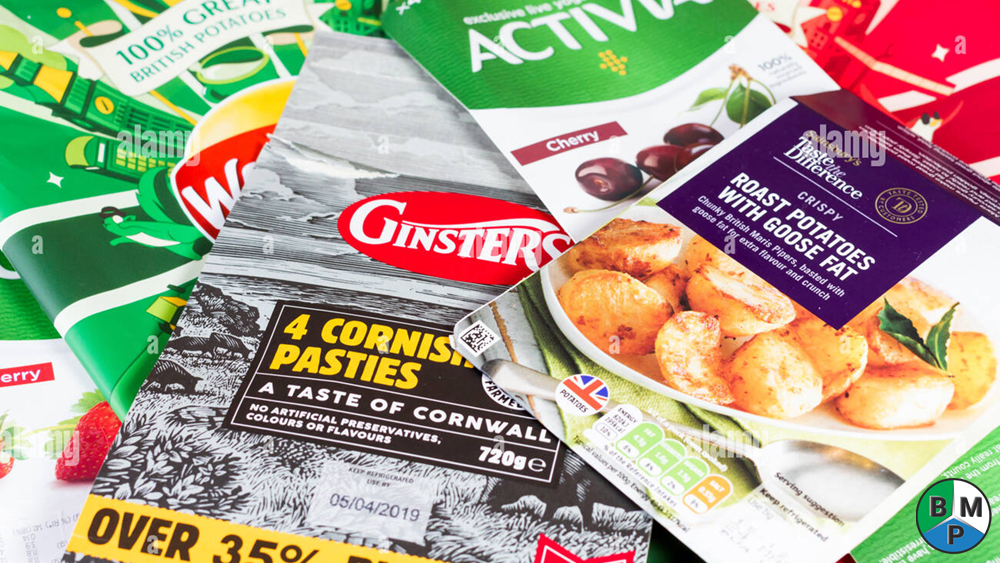
In the printing industry, food packaging is one of the most widely used and closely scrutinized types of packaging. It typically features a variety of printed information and images, such as product ingredients, usage instructions, batch numbers, expiration dates, and barcodes, to meet legal requirements. Printing inks are used on various substrates and can be applied directly to materials such as plastic, paper, and cardboard. For various reasons, ink components may penetrate the inner surface of packaging and come into contact with food.
Paying attention to regulations on printing inks for food packaging is not only an important step but also an essential factor in ensuring product safety and quality. Printing inks do more than convey important information; they also contain chemical components that may affect consumers’ health if specific regulations and standards are not followed. Using inks that do not meet quality requirements can also cause serious harm if they are not properly controlled and managed. Printing inks may contain harmful chemicals such as toluene, benzophenone, and phosphates. These substances can migrate through packaging and come into contact with food, posing health risks to consumers. They may also contribute to environmental pollution when packaging is discarded. Therefore, businesses must pay close attention to regulations on printing inks for food packaging to ensure safety, quality, and sustainability in the packaging industry.
Regulations on printing inks for food packaging refer to the rules, standards, and guidelines governing the selection, use, inspection, and evaluation of inks used in food packaging. These regulations help prevent ink migration into food, protect consumer rights, enhance businesses’ reputations and product quality, contribute to environmental protection, and promote sustainable development. Some regulations on printing inks for food packaging applied in Vietnam and around the world include National Standard TCVN 13928:2023 on Printing Inks for Food Packaging – General Requirements, International Standard IS 15495:2020 on Printing Inks for Food Packaging, and EU Framework Regulation 1935/2004 on materials and articles intended to come into contact with food.
Learn more about food packaging testing: Food Packaging Testing Criteria: Technical Regulations and Limit Tables
Vietnam Issues a National Standard for Printing Inks Used in Food Packaging
Vietnam has made an important step forward in ensuring food product safety and quality by issuing National Standard TCVN 13928:2023 on printing inks used in food packaging. Relevant legal documents include the Law on Food Safety No. 55/2010/QH12 (Article 18); Decree No. 15/2018/ND-CP detailing the implementation of certain provisions of the Law on Food Safety; Decree No. 38/2012/ND-CP detailing the implementation of certain provisions of the Law on Food Safety; and Circular No. 14/2012/TT-BYT providing principles and guidance for implementation and application. This is an important step toward strengthening the product quality management system and protecting consumers’ health based on international standards.
This standard establishes specific requirements for printing inks used in food packaging production, including regulations on ink composition, the permissible levels of chemicals that may be harmful to health, and the information that must be printed on packaging to ensure transparency and consumer safety. One notable aspect of this standard is its strict control over the levels of hazardous substances in printing inks, such as lead, mercury, and other unsafe additives. This helps ensure that printed packaging is not only visually appealing but also safe for consumers. In addition, the standard specifies the necessary information that must appear on food packaging, such as manufacturing dates, expiration dates, nutritional information, and allergen warnings. This enables consumers to identify and select products more easily, making informed and safer purchasing decisions.
In practice, applying TCVN 13928:2023 on printing inks for food packaging is not only an important step toward improving product quality but also reflects Vietnam’s commitment to protecting consumers’ health and rights.
The issuance of TCVN 13928:2023 brings several benefits to relevant stakeholders:
Consumers: Helps ensure health and safety when using packaged food products.
Packaging manufacturers: Provides a basis for producing quality products that meet market demand.
Food manufacturers: Enhances brand reputation and improves competitiveness in international markets.
However, for this standard to be effective, close coordination is needed among government authorities, businesses, and consumers. Regulatory agencies must strengthen inspection and supervision of compliance. Businesses should improve their sense of responsibility and use safe printing inks that meet applicable requirements. Consumers should make informed choices by selecting products with packaging that complies with relevant standards.
The Role of Printing Inks in Food Packaging
In the food packaging industry, printing inks play an extremely important and indispensable role. They are not simply part of the manufacturing process; they also help communicate information, attract customers, and support food safety. Below are some of the key roles of printing inks in food packaging:
Product information: Printing inks on food packaging are used to display essential product information, such as the product name, ingredients, manufacturing date, expiration date, usage instructions, and food safety warnings. This information helps consumers understand the products they purchase and use, supporting safety and quality.
Certifications and standards: Printing inks are also commonly used to display labels, logos, and quality certifications such as ISO, HACCP, and USDA Organic. These markings help consumers identify products and feel more confident in their quality.
Communicating brand messages: Printing inks are used to create distinctive and attractive packaging designs that help products stand out on store shelves and capture consumers’ attention. Through printed packaging, businesses can effectively communicate their brand messages, core values, and commitments. The combination of ink quality and packaging design plays an important role in attracting and retaining customers while ensuring product safety and quality.
Product protection: Printing inks can also help protect products from external factors such as light, moisture, and contamination. Scratch-resistant, water-resistant, and anti-slip ink layers can be applied to protect the packaging and help maintain the quality of the products inside.
Choosing a Quality Printing Partner for Safe Food Packaging

After learning about the essential standards for printing inks used in food packaging, you may be wondering which manufacturer can help you produce high-quality, safe, and sustainable food packaging. If you are looking for a reliable, professional, and reputable partner in the packaging industry, BMP Group is a suitable choice.
With more than 15 years of experience, BMP Group is one of today's leading packaging manufacturers. We have a dynamic, experienced, and highly qualified team that is dedicated to its work. BMP Group provides various types of flexible laminated packaging, serving a wide range of industries, including food, pharmaceuticals, cosmetics, chemicals, and agriculture.
With two manufacturing facilities and a combined production capacity of more than 3,600 tons per month, BMP Group is equipped with some of the most advanced packaging production machinery available today, with equipment fully imported from overseas. In addition, our raw materials are sourced from reputable suppliers and carefully selected to ensure the quality of incoming materials.
With an experienced workforce, modern production lines, and a strict quality management system, BMP Group is committed to delivering high-quality packaging products that are safe for consumers.
Furthermore, BMP Group is proud to have achieved several milestones and adopted numerous international standards for quality, safety, and environmental management, demonstrating our commitment to product quality:
2011: Received ISO 9001:2008 certification.
2014: Received HACCP and GMP certifications for food safety.
2017: Received ISO 9001:2015 certification.
2020: Received BRC Issue 6 certification.
2021: Achieved ISO 15378 certification.
BMP Group has been a trusted partner to many major domestic and international brands, including Vinamilk, Nutifood, Ajinomoto, Unilever, Nestlé, and Coca-Cola. We not only manufacture high-quality food packaging but also contribute to enhancing brand image, increasing product value, and improving customer satisfaction.
Contact BMP Group today for consultation and to find the packaging solutions that best suit your needs.
Email: cdd.bmp@bmppack.com
Hotline: (028)66.756.588